
Hail Damage Roof Repair in Cedar Hill, TX
The hail damage and the claim are two different jobs, and the order you do them in is the part homeowners get wrong. Repair work done before the roof is documented can cost you part of the claim.
The week after the storm, before anything gets fixed
A hail claim runs on what the roof looked like before anybody touched it.
A standard homeowner policy asks you to take reasonable steps to stop further damage after a loss, and reasonable temporary protection is covered on a covered loss when you keep the receipts. Permanent repairs wait for the adjuster.
So the useful order is documentation, then protection, then the repair itself. Photograph what you can see from the ground and from inside the house, note which storm and what date, and send it. The Dallas County record is specific about dates: half-dollar hail was logged near Florence Hill on March 4, 2026. What comes back is an itemized scope in writing, free, with photographs of what was actually found up there.
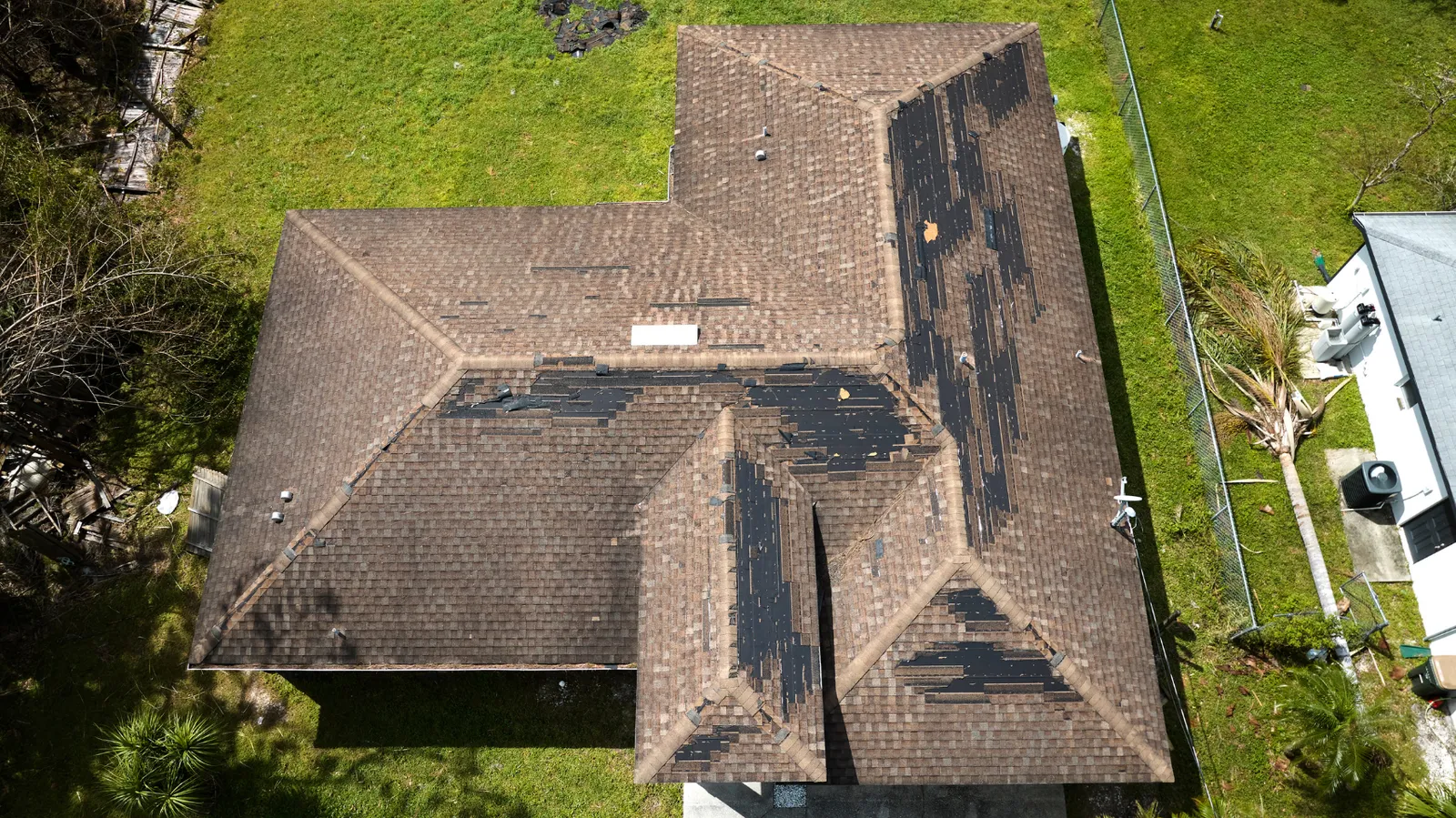
What a Cedar Hill hail damage roof repair covers
Most of a hail job is photographs and paperwork. The part that happens on the roof is short by comparison.
- 01Slope by slope inspection
- Photographs come first, before anything is lifted. They are the record a claim runs on.
- 02Hail bruise mapping
- Soft spots found by hand, marked and counted by test square. A bruise you can feel but cannot see is still damage.
- 03Wind damage check
- Creased tabs, broken seals, dinged vents and valley metal. Wind takes the seal long before it takes the shingle.
- 04Temporary protection
- Cover on the roof surface, put there by a roofer. A roofer brings the ladder for that part.
- 05Itemized findings list
- Materials, slopes and code items named on paper. A line an adjuster can price is a line you can check.
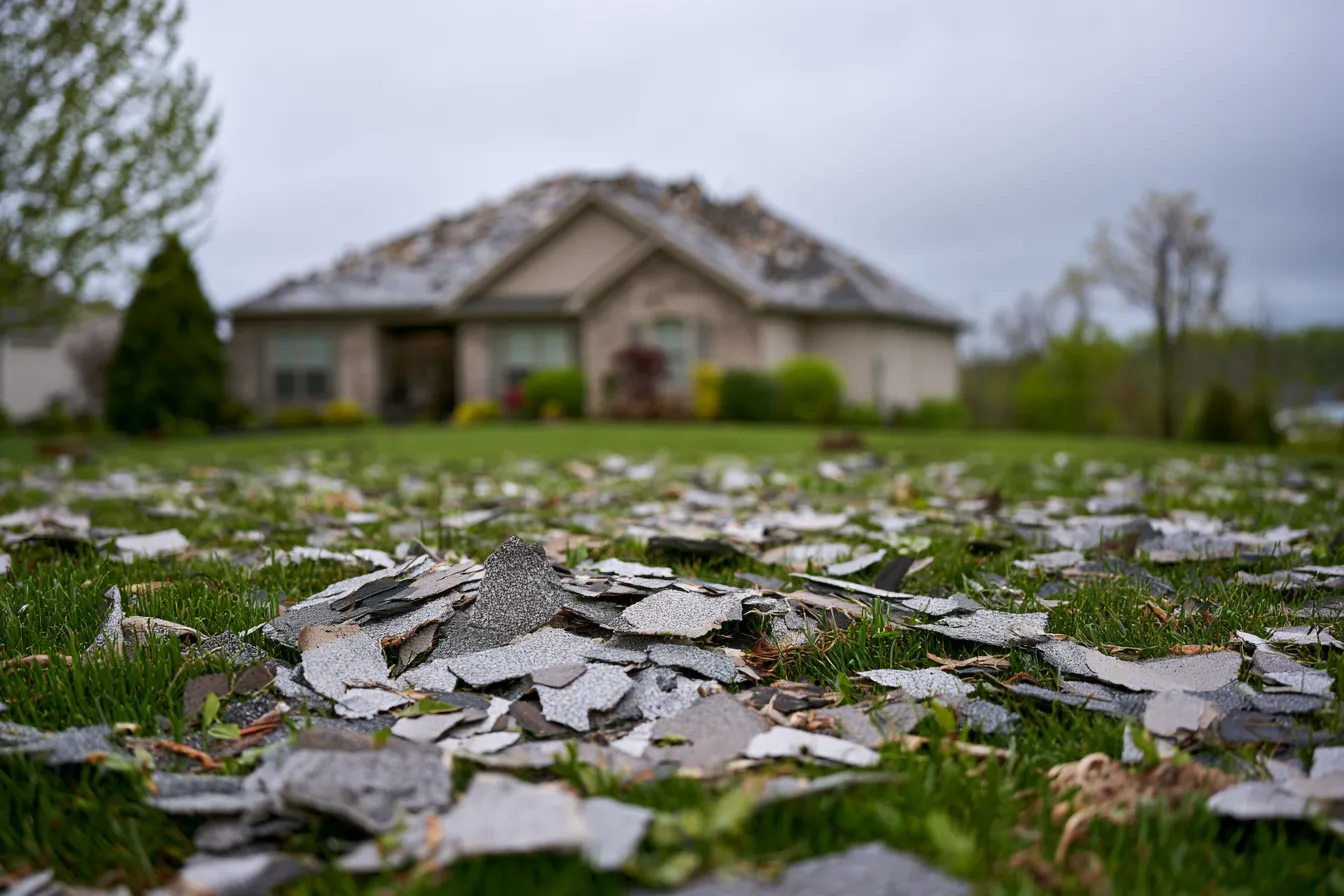
The ground and the inside of the house are the homeowner's half of that list. The roof surface is not.
Damage on the roof, nothing filed yet
Three steps. The first two are yours, the last one belongs to a local roofer.
You document it
Photographs from the ground and from indoors before anything is moved or covered: the ceiling ring, the dented gutter, the grit at the downspout. Write down which storm and what date while you still remember.
You file it
The homeowner reports the loss to the carrier rather than signing that right over to a contractor, and asks for the claim number and what has to be documented. The policy's claims section covers the rest of that timeline.
The roofer's half
What is found on your slopes comes back photographed and summarized, so you and the adjuster are reading the same list. If the storm did not hurt the roof, that is what the write-up says.
The Cedar Hill warning signs worth a second look
All of this is visible from your own grass or your own hallway. None of it needs a ladder.
- Grit at the downspout: A cone of black sand at the splash block is the shingle surface washing off.
- Dented gutters and fascia: Soft metal keeps the record of a storm long after the roof stops showing it.
- Mashed fins on the condenser: If the air conditioner took dents at eye level, the roof took the same hits.
- Pocked screens and spatter marks: Torn window screens and fresh light marks on painted rails date the strike.
- A damp patch indoors: Water runs the deck and the rafter before it drops, so the opening is rarely directly above the stain.
None of it settles anything by itself. It is the reason to have somebody look while the evidence is still clean.
What decides the price on a Cedar Hill roof
Hail work is priced off the count, not the calendar. How many slopes took functional damage, how much has to come off to reach it, and whether the stones drove water into the decking underneath.
The bigger number is usually not on the estimate at all. A wind and hail deductible is often written as a percentage of what the house is insured for rather than a flat amount, and that is the part most people meet exactly once. Whether the policy settles at replacement cost or at depreciated value decides the rest, and both of those live in your paperwork, not ours.
See what moves the cost- How many slopes took damage serious enough to affect how the roof performs
- Steep or cut up roofs are slower to walk
- Decking replaced where the water got through
- Impact rated shingles instead of standard architectural
- Code items the first adjuster scope left out
- Replacement cost or depreciated value in your policy
What Cedar Hill weather does between storms
The county record does not read like one bad afternoon. Hen-egg hail near Florence Hill, the same size again at Hutchins, and something bigger than a hen egg over Garland, all inside a few seasons.
Size is only half of it. A smaller stone carried by a hard gust does more than a bigger one with no wind behind it, which is why the wind check belongs in the same visit as the hail check.
- 01Hail bruises, wind peels
- Two different failures on the same roof. A soft spot under the granules is hail; a fold line across a tab is wind that broke the seal.
- 02Rain about weekly
- Across the metro, roughly 53 days a year bring a tenth of an inch of rain or more, so a small opening gets tested about one week in seven.
- 03Damage that blends in
- Fresh bruising weathers over the following months until it reads as ordinary aging, which is why the record is worth taking while it is still clean.
The rain figure is a metro normal rather than a Cedar Hill weather station reading, and the hail counts are the county's record rather than any one street's.
Questions Cedar Hill homeowners ask first
The ones that come up most in the days after a hail storm. Answers follow the claim through in order.
Q1Should I file the claim before or after somebody looks at the roof?
Q2Can I get up there and tarp it myself?
Q3The house next door got a new roof and I was told mine is fine. How?
Q4How long do I have to file a hail claim?
Q5Who stands behind the repair afterwards?
Ask about your Cedar Hill roof
Send the date of the storm and what you can see from the ground. If the roof turns out to be fine, that is what the write-up will say.