
Gutter Installation in Cedar Hill, TX
Most gutter trouble on a house here is not the gutter itself, it is the installation: a trough too small for the roof pouring into it, or one hung slightly off level.
Read the downspout before you blame the gutter
The coarse black sand that collects where a downspout empties is not street dirt. It is the surface of the shingles washing off, which makes the gutter the easiest place to read a roof from the ground.
Grit says the covering is wearing. Water going over the front edge in every hard rain says the trough was never wide enough for what sits above it, and no amount of clearing changes a width.
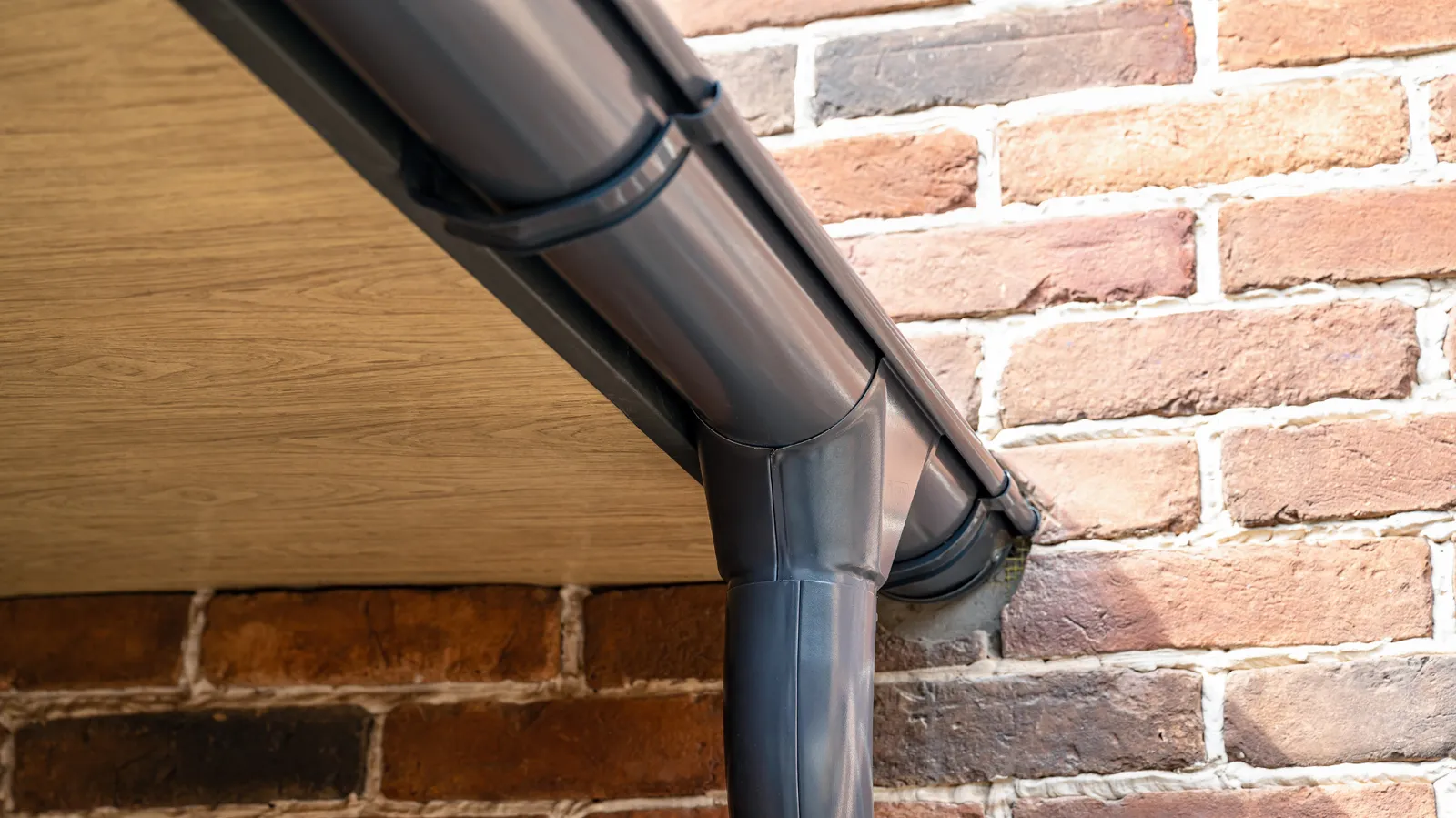
What a Cedar Hill gutter installation covers
Gutter work is metal, hangers and outlets. What lands in the quote depends on the roof feeding them.
- 01Roof area and pitch
- The runoff gets added up first. Trough width comes out of that number.
- 02Seamless aluminum runs
- Rolled on site to the length of each board. Joints only at corners and outlets.
- 03Downspouts and outlets
- Half the system and the half that gets skimped. Every run needs somewhere to empty.
- 04Fascia looked at first
- New gutter on soft wood sags early. Hangers only hold in sound board.
- 05Discharge past the slab
- Extensions carry water away from the foundation. Splash blocks do the same work cheaper.
- 06Screens or mesh, optional
- They reduce how often a trough fills. They never end the clearing.
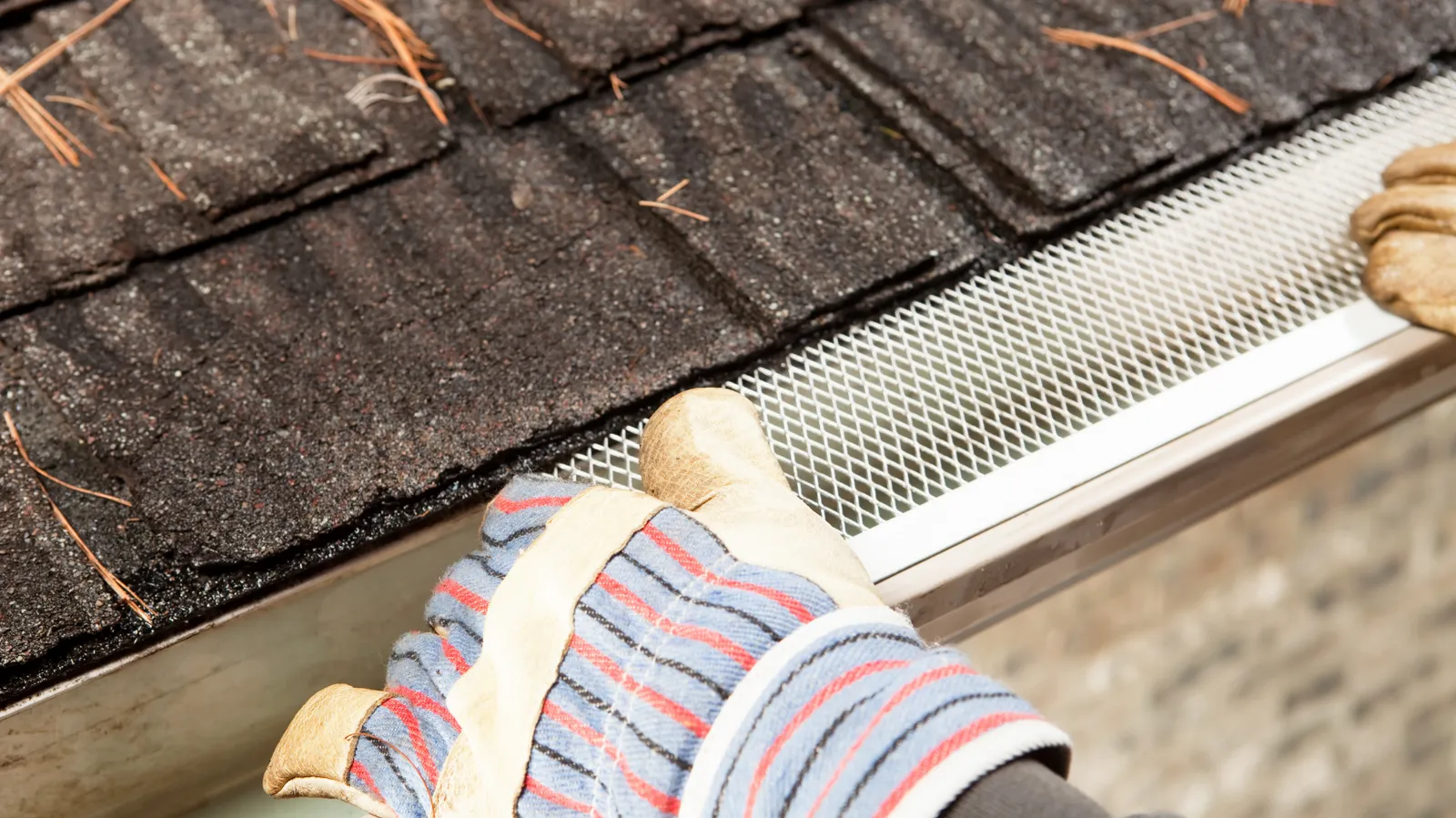
Width and downspout size are a judgment made at the house, the kind no shelf label can make for you, and a step up in aluminum thickness costs little at install and a great deal as a retrofit.
Know the order before anyone quotes you
Gutters are one of the shorter jobs on a house. Most of the work happens before the metal.
Add up the roof
Area, pitch and the number of planes feeding each run get worked out on the ground. Width and downspout count come from that math instead of a shelf chart.
Wood before metal
The fascia gets tested and replaced where the wood has gone soft. A run hung on soft board pulls its fasteners and starts dipping inside a season or two.
Form, hang, drain
Coil is rolled to length at the curb, pitched toward the outlets, and the downspouts and extensions carry the water out past the slab. The metal stage is the quick part.
What a failing gutter looks like from the yard
All of these read from the ground. Several at once is a drainage problem, not a cleaning problem.
- Coarse black grit at the downspout: the shingle surface above is washing off and settling where the water lands.
- Water sheeting over the front edge: the trough is taking on more than its width can move in a hard rain.
- Gray streaks down the outside face: water has been going over the lip for a while and pulling grime down with it.
- A dip between two hangers: the run has lost its pitch, or the board behind it has gone soft.
- Standing water days after rain: the outlet is blocked or the trough is not falling toward it.
- Trenched soil along the drip line: runoff is landing in one line beside the slab instead of leaving through a downspout.
- Paint bubbling under the gutter: the wood behind it has been wet longer than the paint could hold.
Every one of these is visible from the yard, during a rain or right after. None of it is worth getting up on a ladder for.
What new gutters cost in Cedar Hill
Gutter work is priced by the foot, and the foot is the least interesting part of it. Two houses with the same length of run land a long way apart once corners, height, outlet count and the state of the fascia are counted in.
Aluminum is where most of this town lands, and the live question there is thickness more than brand. Copper is a different order of money and a different decision entirely. The one upgrade to raise early is coil thickness, because it is cheap while the crew is there and expensive to go back for.
See what moves the cost- Total run length, plus every corner and outlet
- Roof area and pitch, which set the width
- One story or two, and how open the access is
- Downspout count, sized to the gutter above
- Fascia repair where the old run was leaking
- Aluminum thickness, or a step up to copper
- Screens or mesh, if they go on at all
What roofs face around Cedar Hill
Rain in this part of the metro rarely makes the news. It lands on roughly 53 days a year at a tenth of an inch or better, which is steady volume across a lot of ordinary afternoons, and steady volume is what finds a trough that was sized short.
A good share of the city housing went up in the 2000s. Roofs on those houses are mid-life rather than finished, so repair and replace are both honest answers there, and the gutter question usually gets asked at the same time.
- 01Steady, year-round rain
- Volume arrives often here. An undersized trough overflows on ordinary afternoons, and not only on storm days.
- 02Valleys concentrate the flow
- Two slopes send their water down one line. The outlet under a valley works harder than a side.
- 03Hail marks the metal too
- Aluminum dents in the same storms that bruise a roof. Those dents show from the yard.
- 04Mid-life roofs, live question
- Plenty of housing here is neither new nor spent. Repair or replace is a real choice on it.
None of this is a street-by-street fact. It is the kind of roof and the kind of rain common around here.
Gutter questions Cedar Hill owners ask first
These come up on most gutter quotes. The answers do not change once a number is on paper.
Q1Do I need 6-inch gutters, or is 5-inch enough?
Q2Should new gutters go on with a roof, or after it?
Q3Are gutter guards worth putting on?
Q4Where is the water supposed to end up?
Q5The hail dented my gutters. Does that ride on the claim?
Q6Who stands behind the work if a run starts leaking?
Book a free Cedar Hill roof check
The address and a line about where the water is going is enough to start with. What decides the fix is usually the slope above the trough.