
Roof Repair in Cedar Hill, TX
Most roof repair in Cedar Hill starts as a brown ring on the ceiling that spreads a little more with the next rain. The opening that made it is almost never directly above it.
What the water trail shows
Water gets in at one point and comes out somewhere else. It runs down the wood under the shingles, along a beam, across the top of the drywall, and drops through wherever the ceiling gives it an opening. A ring three feet from the wall can start at a vent pipe on the other slope.
So how does anyone find the opening from down here? They do not. Somebody follows the water back from the stain to the place it started, and what turns up gets written down, including the parts that turn out to be fine.
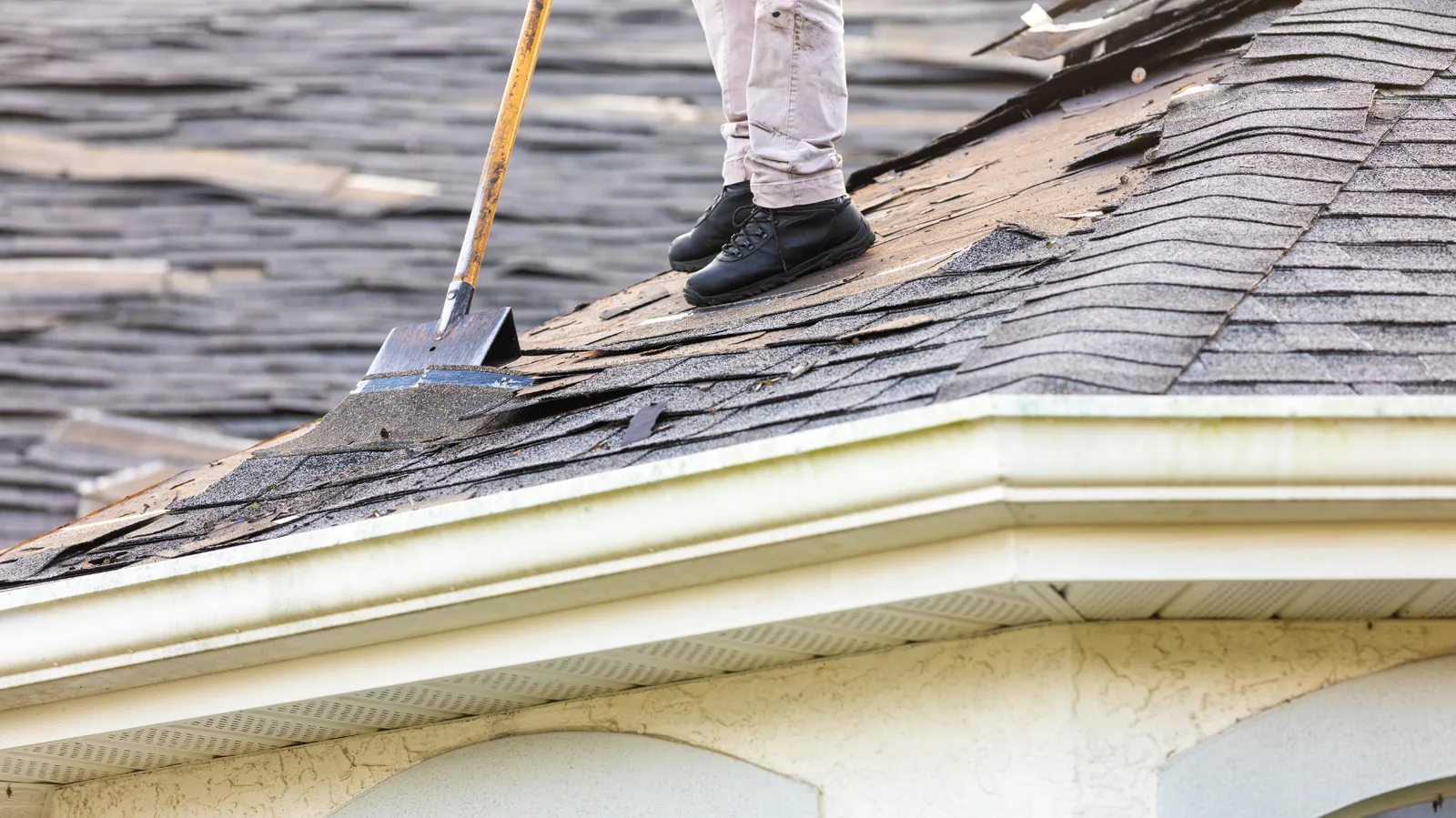
What roof repair covers on a Cedar Hill roof
Most of what leaks on a house here is a seam or a hole something was put through, rarely the shingle field itself. Vents, valleys and the metal where a roof meets a wall are where water finds its way in first.
- 01Tracing the leak
- Following the water back from the stain to the opening. The stain on the ceiling marks where it came out, often a good distance from where it went in.
- 02Pipe boot replacement
- The rubber collar at a vent pipe, usually first to fail. The rubber collar around a vent dries and splits long before the shingles do.
- 03Flashing repair
- The metal at chimneys, walls and skylights, where leaks start. Metal at a wall, chimney or valley moves with the house and opens a gap.
- 04Valley work
- The trough where two slopes meet and the water concentrates. Two slopes meet and send their water down one line, which is where wear concentrates.
- 05Wind damage patches
- Creased, lifted or missing shingles woven back into the field. A lifted or missing shingle leaves the layer beneath it doing a job it was not built for.
- 06Decking replacement
- The wood under the shingles, once water has softened it. Where water sat long enough, the wood under the covering has to come out too.
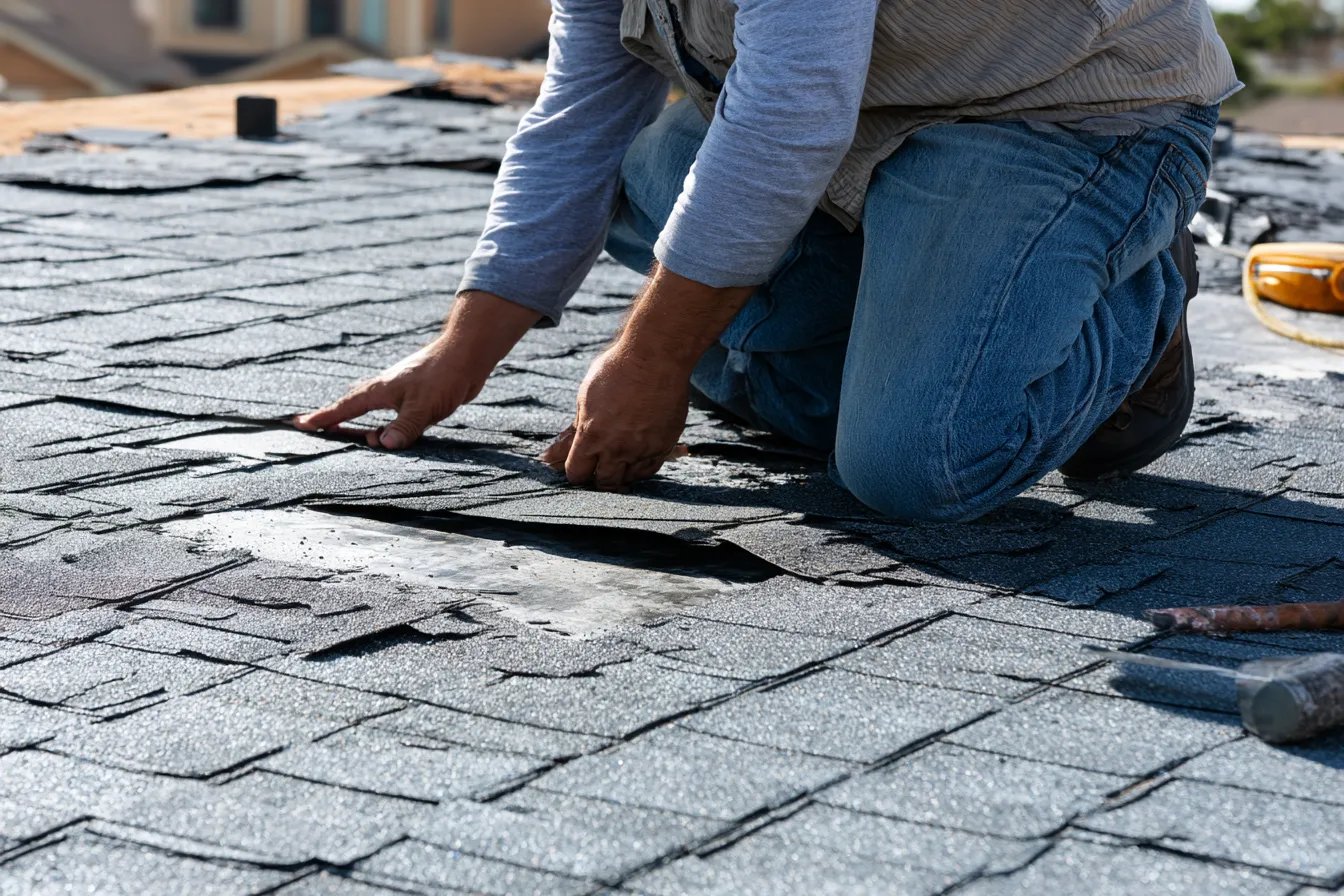
If what is up there turns out to be past a repair, that is worth hearing before you pay for a patch.
How a repair gets done
Most of the work is looking. What comes after it is short by comparison, and it follows the order below.
Find it first
Finding the opening is most of the job. A patch placed on the wrong seam gets placed again next season.
Scope in writing
What failed, what it takes to put right, and what the work runs to, written down before the roof is opened.
Repair, then a look around
Materials named, the repair made, and the rest of the roof checked while a roofer is already up there.
What to look for before it gets worse in Cedar Hill
All of this is visible from the ground or from inside the house. None of it needs a ladder.
- A ring that keeps changing: A stain that widens or darkens after rain is active, not history.
- Grit at the downspout: Coarse black sand where the gutter drains is the shingle surface washing off.
- Dented gutters and vent caps: Soft metal keeps a record of a hailstorm that the shingles can hide.
- Shingle tabs in the yard: A piece of roof on the ground came off something that is now open.
- A ceiling that sags or bulges: Keep people and pets out of that room and let a roofer relieve it from a safe position.
- Daylight in the attic: A bright day shows openings from inside that the surface hides from below.
Any one of these is worth a look. None of them is a diagnosis.
What moves the figure up or down in Cedar Hill
Two repairs that look the same from the street can land in very different places, and square footage is rarely what does it. On older houses the first question is layer count. On a cut-up roofline it is planes and valleys, and every extra angle is another seam that can fail.
A boot or one run of flashing is a small, contained job. A rebuilt valley, or a leak that softened the wood underneath, is a different order of work, and the estimate should say which.
There is also a point where patching stops being cheaper. One leak a roofer can trace is a repair; leaks arriving in different places across a season is a system going in sequence.
See what moves a repair price- How many shingle layers are already on the deck
- Valley and flashing work versus a simple field patch
- Whether the wood underneath turns out to be wet
- Pitch, height, and how hard the spot is to reach
- Whether a matching shingle is still made
What the county weather record asks of a roof here
The climate that ages a roof around here is not the dramatic part. Across this part of the metro the average day moves 20.7 degrees between its high and its low, and a covering expands and contracts through that every day of the year. Sealant and seams give up before the shingle field looks tired, which is why a roof with no storm in its history still starts leaking.
Hail is the loud version. An inch is roughly where asphalt takes damage that matters rather than damage that only shows.
- 01Daily thermal cycling
- The covering moves every day of the year. Seams and sealant are what tire first, well before the field looks old.
- 02Hail that does real damage
- Around an inch is the anchor. Wind speed at the time counts for as much as the size of the stone.
- 03One wet day in seven
- Roughly 53 days a year bring a tenth of an inch of rain or more. A small opening does not stay small.
None of that is a reason to replace a roof with life left in it. It is why a repair here gets checked at the seams and not just under the stain.
What people here ask before they commit
Repair questions tend to arrive in the same order once water has shown up inside. These are the ones worth settling before any work is scheduled.
Q1Water is coming in right now. What should I do?
Q2Should anything be fixed before the adjuster comes?
Q3Is repair work covered by a warranty?
Q4How do I know when repairing stops making sense?
Q5My roof already has two layers of shingles. Does that change things?
Q6Can you tell what is wrong from a photo of the ceiling?
Get a Cedar Hill roof looked at
Tell us which room the ceiling is stained in and how long it has been there. A roofer traces it back to the opening, and the look costs nothing.