
Storm Damage to a Roof in Cedar Hill, TX
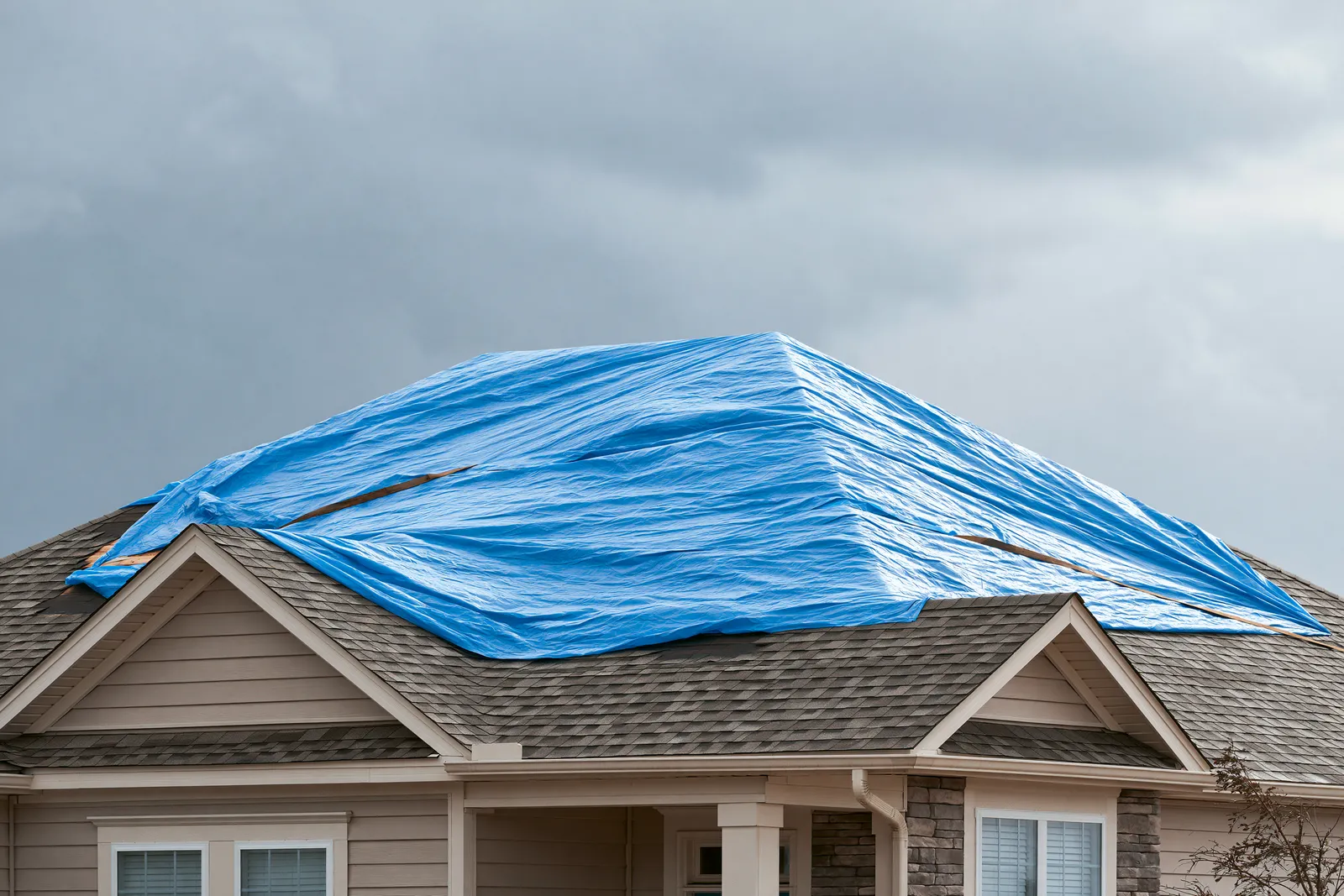
Most storm damage on a roof is invisible from the ground and has not leaked yet. The slope that faced the wind is the one to check first.
Why storm damage on a roof is not a driveway question
Most wind damage to a roof does not start by tearing a shingle off. It starts at the seal strip, the line of adhesive that bonds one course of shingles to the course below, and a hard enough gust can break that bond without tearing anything. The tab settles back close to where it started, so from the street the roof looks unchanged. It is no longer bonded to its neighbors, and it is the one most likely to go next time.
Hail works differently again, bruising the mat under the granules where nothing shows on the surface. Both kinds land hardest on whichever slope faced the storm, which is why a roof that looks fine from the driveway has only answered for half of itself. The Dallas County record shows how ordinary that is here: half-dollar hail near Florence Hill on March 4, 2026, and sixty mile per hour gusts through the Wheatland area on February 14, 2026.
Dallas County storm record, on the books.
These are the hail and wind events NOAA logged across Dallas County, 2023–2026. A local roofer reads your roof against what this area gets, not a worst-case sales pitch.
Source: NOAA / NCEI Storm Events Database · Dallas County 2023–2026 · updated July 2026. Year rows count hail days at 1" or larger; the county figure above counts every hail day on record, at any size. Dated rows are the largest event of each recent year, then the largest remaining on record. The database records at county resolution, which makes it a record of the area rather than of any one address.
What a Cedar Hill storm leaves that shows from the ground
None of this asks you to get on the roof. It only asks you to look at what a storm leaves in easier-to-reach places, on both slopes, including the one you cannot see from the street.
- A shingle sitting slightly out of line with the ones around it: Walk the yard after a windy storm and look along the roofline for a tab that catches the light differently or sits a touch higher than its neighbors. That shingle likely lifted and reseated on its own, and reseated is not the same as sealed.
- A dent in the vent caps, flashing edges, or gutters: These are the softest metal on the roof, so they mark first and mark clearly where a shingle surface barely shows a mark at all. A handful of small round dents on any of them is a good reason to have the shingles themselves looked at more closely.
- A crease across a shingle instead of a soft round bruise: Wind folds a shingle where hail only bruises it, and a fold shows up as a straight or angled line running across the tab rather than a dark, rounded spot. That line will not smooth back out on its own, and it keeps flexing at the same spot every time the wind blows.
- A new stain or ring on the ceiling under just one side of the roof: A storm comes from one direction, so water usually finds its way in on the slope that faced it while the other slope stays dry. A damp patch or a fresh ring on the ceiling in one part of the house, with nothing matching on the other side, is often the first sign that shows up indoors.
The parts Cedar Hill homeowners double-check
Answers about what storm damage looks like and where to check for it. Filing and cost are covered elsewhere.
Q1How can I tell if my roof has storm damage without climbing up there?
Q2Does storm damage always look like a dent or a hole?
Q3Why would only part of my roof be damaged?
Q4Is hail damage the same thing as wind damage?
Q5What should I do if I notice one of these signs?
Describe the storm damage and a Cedar Hill roofer documents it
Note what you saw and where you saw it, from the ground or from inside, on every side of the house. One local roofer takes it from there.