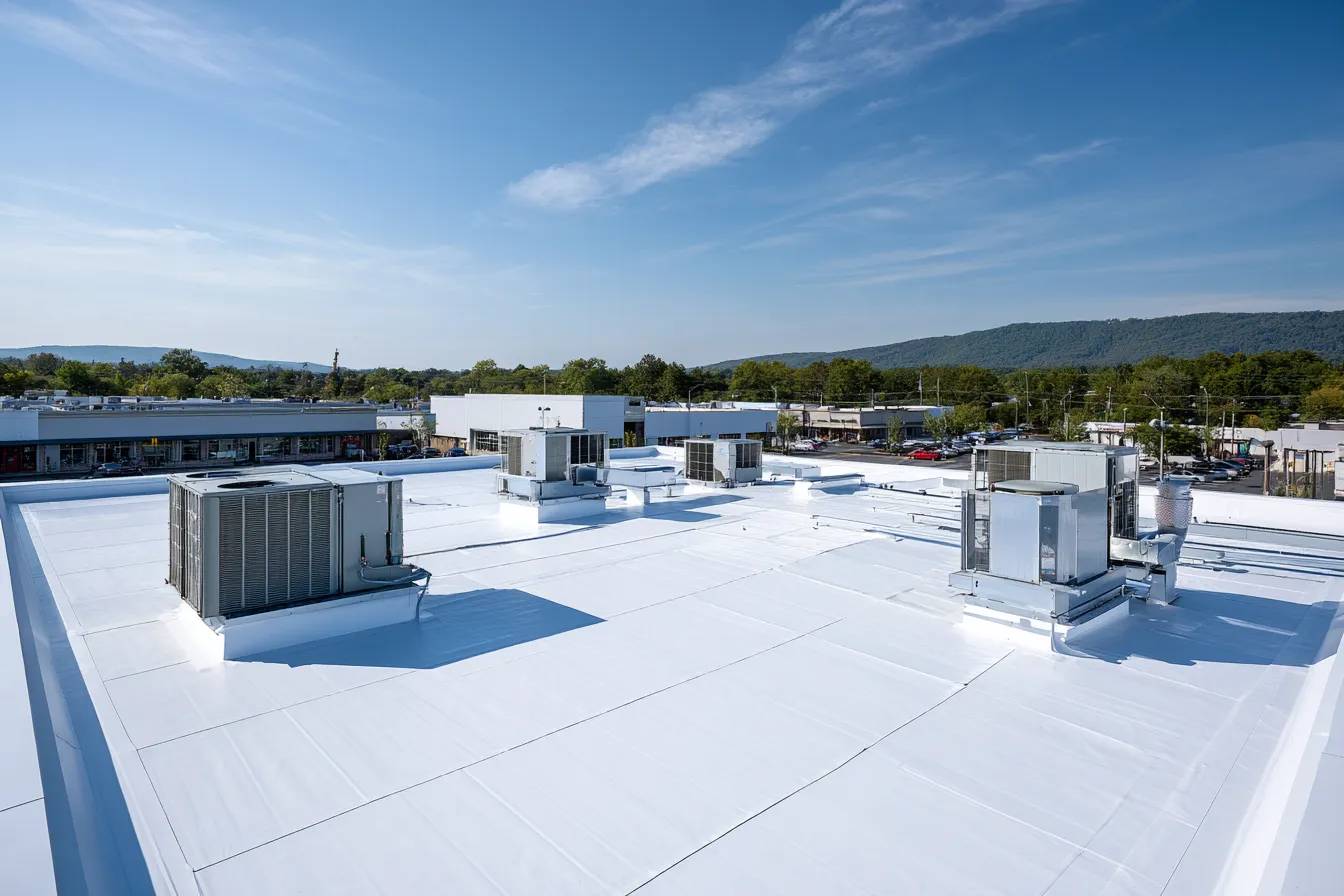
Commercial Roofing in Cedar Hill, TX
Commercial roofing turns on one difference: a low-slope roof drains water instead of shedding it, and that changes the covering, the seams and where it fails. Send the address, and the field and the drains are the first things walked.
Why a flat roof is a different building system
A steep roof gets rid of water by outrunning it. Each course of shingles overlaps the one below, and water crosses the surface fast enough to be gone before it finds a way in. A low-slope roof cannot rely on that. The pitch is too shallow for shingles, so the covering has to be a continuous membrane, one sealed surface instead of thousands of overlapping pieces, and the water has to be routed off through drains and slope built into the deck.
That single change drives almost everything else about how a commercial roof is built and where it fails. The open field of the membrane is rarely the problem. The seams are, because a seam is where two pieces meet and where a weld has to keep working for years without anyone checking on it. Drainage matters as much as which membrane goes down.
What goes on a Cedar Hill commercial roof
Four kinds of covering show up on low-slope buildings, and they solve the same drainage problem in different ways. None of these is the automatic right answer; what fits depends on the roof underneath it.
TPO / PVC
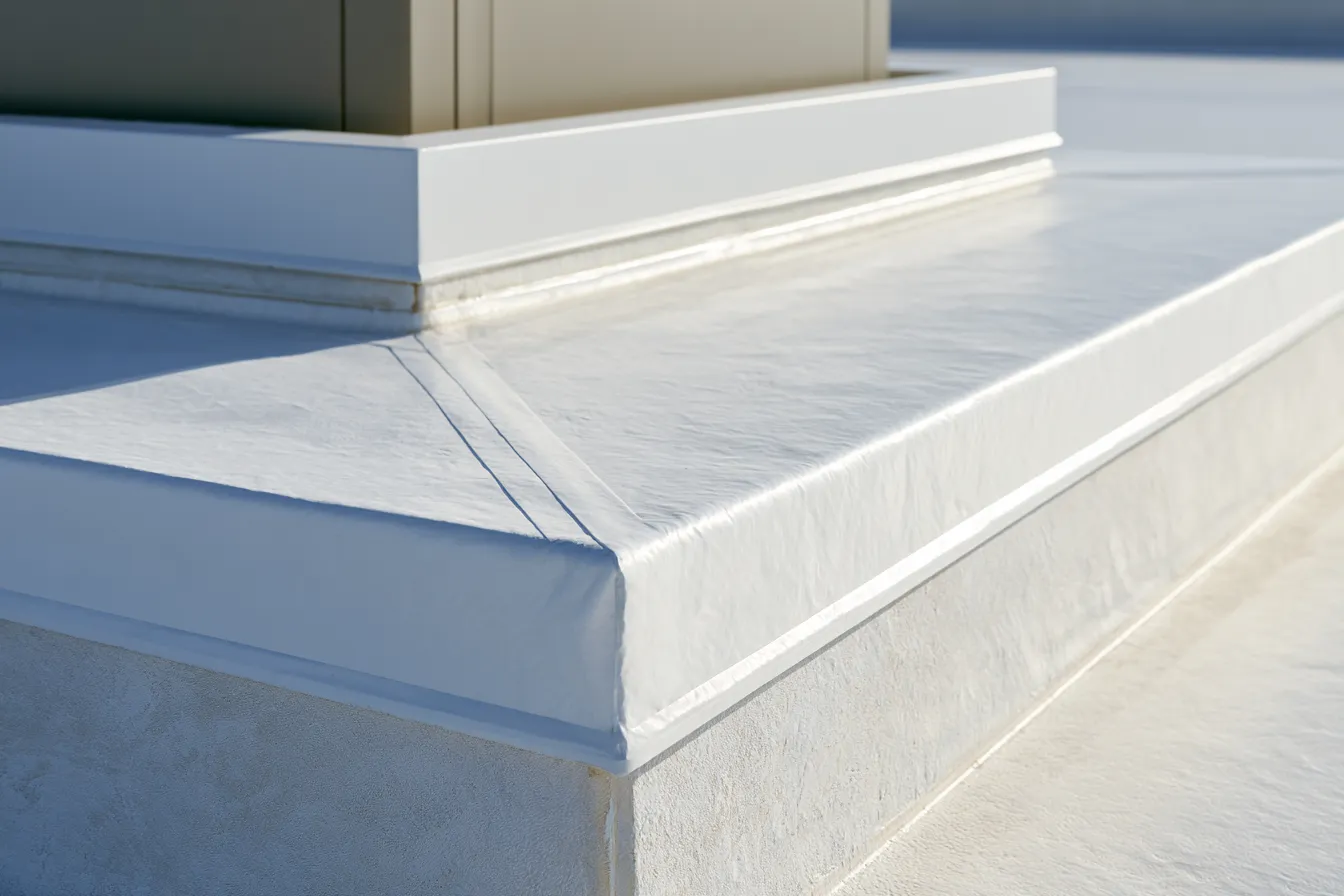
A single sheet of thermoplastic membrane rolled out and welded to the next sheet using heat. The welded seam is what makes the roof continuous, and a properly done weld is stronger than the sheet on either side of it.
EPDM
A synthetic rubber sheet, most often black, installed in wide rolls across the deck. The seams bond with adhesive tape or liquid adhesive, a different discipline from heat welding with its own failure points.
Modified bitumen
Reinforced asphalt sheet goods installed in overlapping rolls, either torched down or self-adhered depending on the product. The layered rolls give the covering some built-in redundancy, since one lap seam is backed up by the sheet underneath it.
Built-up roofing
Alternating layers of hot or cold asphalt and reinforcing fabric, built up ply by ply directly on the roof. It is the oldest of the four systems, and the number of plies is part of what a roofer means when describing a built-up roof's makeup.
Which of these fits a given roof depends on the slope, the deck underneath, the rooftop equipment, and what is already up there.
What commercial roofing covers on a Cedar Hill building
A commercial building does not get a glance from the curb. It gets a walk across the roof instead, and these are the things that walk covers.
- 01Drainage and ponding
- A roofer checks every drain, scupper, and low point for water still sitting on the roof well after rain has stopped. Standing water that lingers usually signals a drainage problem more than a failed membrane.
- 02Membrane and seams
- A roofer walks the field of the membrane, then spends the closer time on the seams, since most leaks on a commercial roof start there. Any lifted, cracked, or open seam is marked and its location recorded.
- 03Penetrations and curbs
- HVAC curbs, vents, drains, and conduit runs multiply on a commercial roof, and each one is a detail flashed on its own. A roofer checks the penetrations individually, since a sound-looking field around one says nothing about the seal underneath.
- 04Deck and insulation condition
- What the covering sits on matters as much as the covering itself, so the walk checks for soft spots, trapped moisture, and insulation that has stopped doing its job. A membrane installed over a wet deck fails regardless of how well it was put down.
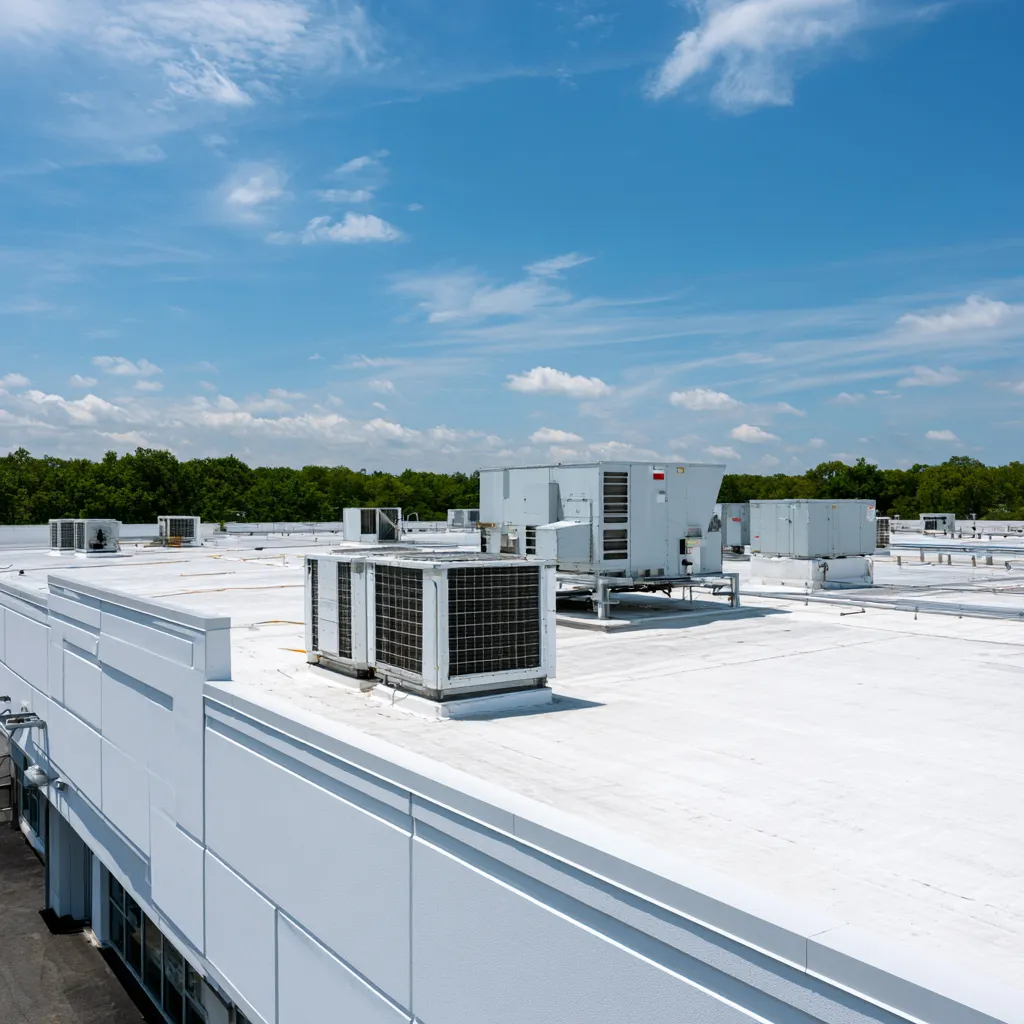
What comes back from that walk is a written condition report tied to the building, not a guess made from the parking lot.
How a commercial roof project runs on a working building
A roofer schedules a commercial roof project around a building that stays open through the work. These are the stages that make that possible.
Assess the roof
A roofer walks the field, the drains, the seams and the penetrations, and documents what is found. That record covers the membrane, the drainage, and the deck underneath it, going well beyond what is visible from the parapet.
Plan around the building
A roofer works out access, staging, and scheduling around the tenants and the business inside, since the building keeps operating through the project. The order sections open in, and how many at a time, is settled before any work starts.
Address drainage first
Where ponding or a drainage problem shows up in the assessment, a roofer addresses it before or alongside the membrane work, since a new membrane over an unsolved drainage problem inherits the same failure. Slope and drain capacity are checked against what the roof sheds.
Commercial roofing questions Cedar Hill owners ask
The questions that come up once a building owner starts looking at a low-slope roof instead of a house roof. These cover drainage, membranes, penetrations, and what changes when tenants are involved.
Q1Why does a commercial roof need a membrane instead of shingles?
Q2Is standing water on a flat roof always a problem?
Q3Why do the seams matter more than the field of the membrane?
Q4What are penetrations, and why do they matter on a commercial roof?
Q5How does working around tenants change a commercial roof project?
Get a Cedar Hill commercial roof assessed
Send the building's address and what has been noticed, whether that is a stained ceiling tile or standing water after a rain, and a local roofer can walk the roof and put a written condition report in your hands. No hard sell on a building decision this size.